
Sprint Planning: What It Is and How It Works
What Is Sprint Planning?
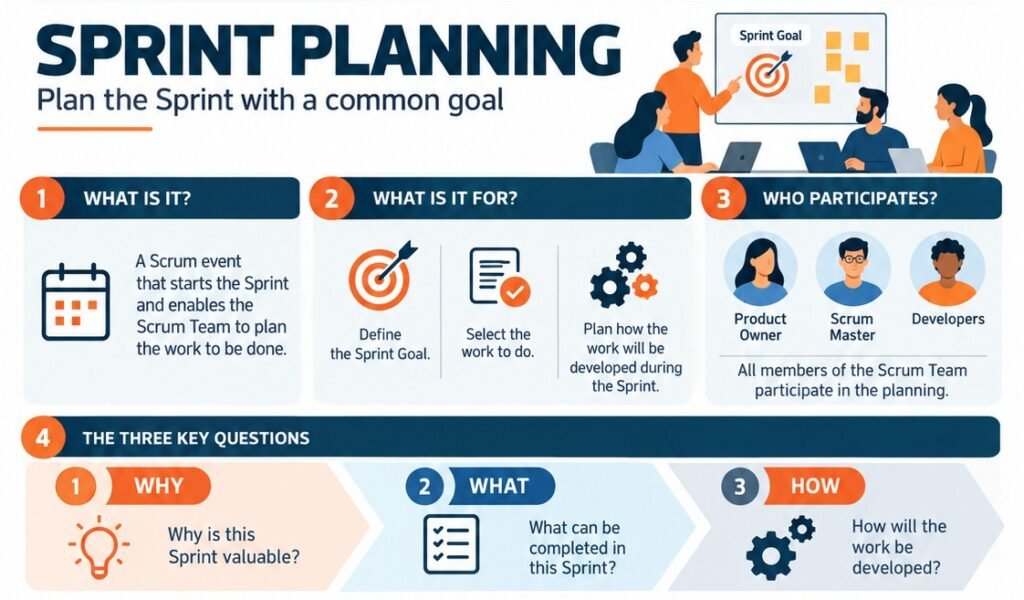
Sprint Planning is a Scrum event that kicks off each Sprint. During this meeting, the Scrum Team plans the work to be carried out during the upcoming Sprint and agrees on an approach to achieving the intended outcome.
It is not simply about assigning tasks. The aim is to create a shared plan that helps the team understand what it wants to achieve and how the work can be delivered.
What Is the Purpose of Sprint Planning?
Sprint Planning helps the team align around a common goal, select the work to be undertaken and discuss how that work will be completed.
The outcome is the Sprint Backlog, which includes the Sprint Goal, the Product Backlog items selected for the Sprint and a plan for delivering the work.
The team develops this plan collaboratively and adapts it as new information emerges throughout the Sprint.
Who Participates?
The entire Scrum Team participates in Sprint Planning, including the Product Owner, the Scrum Master and the Developers.
Before the meeting, the Product Owner ensures that the team is prepared to discuss the most important Product Backlog items and how they contribute to the Product Goal.
During the event, the Developers select the work they believe they can complete and plan how to deliver it. Meanwhile, the Scrum Master helps ensure that Sprint Planning is understood and conducted effectively, in accordance with Scrum.
The Three Key Questions
Sprint Planning addresses three essential questions.
1. Why is this Sprint valuable?
The team discusses why the Sprint matters and what value it aims to deliver. This provides the foundation for the Sprint Goal.
2. What can be done this Sprint?
The team considers which Product Backlog items can be selected for the Sprint, taking into account its capacity, priorities and the work involved.
3. How will the chosen work get done?
The Developers plan how to turn the selected work into an Increment that meets the Definition of Done.
Together, these three questions help the team turn priorities into a clear goal and a practical plan.
How Long Should It Take?
For a one-month Sprint, the Scrum Guide sets a maximum duration of eight hours for Sprint Planning. For shorter Sprints, the event is usually shorter.
The goal is not to use every available minute, but to ensure that the team leaves the meeting with a clear objective and a sufficiently developed plan to get started.
How to Prepare for and Run a Sprint Planning Meeting
Effective Sprint Planning starts before the meeting itself. The Product Backlog should be sufficiently refined to support a productive discussion, and the team should understand the relevant context, priorities and constraints.
During the meeting, the team establishes the Sprint Goal, discusses and selects the work to be undertaken, and develops a plan for delivering it.
Avoid committing to more work than the team can reasonably take on. The initial plan should not be treated as a fixed list of tasks: the Sprint Backlog evolves as the Developers learn more throughout the Sprint.
Conclusion
Effective Sprint Planning is about more than deciding what to work on over the coming days. It is about building a shared understanding of the value the team wants to deliver, the work it has selected and how that work will be carried out.
With a clear goal, an aligned team and an adaptable plan, the Sprint starts with a common sense of direction.
Visit the XPM Consulting website and download the Sprint Planning template to help plan your next Sprint.
Frequently Asked Questions
What is Sprint Planning in Scrum?
Sprint Planning is a Scrum event that takes place at the beginning of each Sprint. During the meeting, the Scrum Team establishes the Sprint Goal, selects Product Backlog items to work on and plans how the work will be carried out.
What is the purpose of Sprint Planning?
The purpose of Sprint Planning is to create a shared plan for the Sprint. It aligns the team around the value to be delivered, the work selected and the approach to completing it. The outcome is the Sprint Backlog.
Who attends a Sprint Planning meeting?
The entire Scrum Team attends Sprint Planning: the Product Owner, the Scrum Master and the Developers. Together, they clarify priorities, establish the Sprint Goal, select the work and develop a plan for the Sprint.
How long should a Sprint Planning meeting last?
For a one-month Sprint, the Scrum Guide sets a maximum duration of eight hours. Shorter Sprints generally require less time. The actual duration depends on the team’s planning needs and the length of the Sprint.
What are the three key questions in Sprint Planning?
Sprint Planning addresses three questions: Why is this Sprint valuable? What can be done this Sprint? How will the chosen work get done? These questions help the team establish the Sprint Goal, select the work and develop the Sprint Backlog.
What is the difference between Sprint Planning and Sprint Review?
Sprint Planning takes place at the beginning of a Sprint and focuses on setting the Sprint Goal and planning the work. The Sprint Review takes place towards the end of the Sprint, allowing the Scrum Team and stakeholders to inspect the outcome, discuss progress towards the Product Goal and consider what to do next.
What is the Sprint Backlog?
The Sprint Backlog is the Developers’ plan for the Sprint. It consists of the Sprint Goal, the Product Backlog items selected for the Sprint and an actionable plan for delivering the Increment. It evolves throughout the Sprint as the Developers learn more about the work.
Is Sprint Planning mandatory in Scrum?
Yes. Sprint Planning is one of the formal Scrum events and takes place at the beginning of every Sprint. It helps the Scrum Team establish a shared direction before work begins.